

A seat cover can look refined in a product photo and still be the wrong fit for your car. In the UAE, premium car seat covers for Chinese cars should suit the seat shape, feel comfortable in everyday use and make sense for a cabin exposed to heat, sun, dust and sand. A poor fit can bunch across the cushion or get in the way of seat controls and safety features.
Whether you drive a BYD, Jetour, Chery Tiggo, NIO or another Chinese car, start with fit, then compare material and style. Your model year, trim and seat layout can all affect compatibility. This guide explains what to check before choosing, how to think about UAE conditions and why safety features deserve close attention. The goal is a considered cabin upgrade that keeps everyday functions accessible.
Key Takeaways
- Choose premium car seat covers for Chinese cars by checking fit and coverage before prioritizing appearance or material.
- Compare materials for comfort and care, keeping UAE sun, heat, dust and everyday use in mind.
- Treat “universal fit” as a broad approach, not proof of compatibility. Note your car’s model, year, trim and seat features when comparing options.
- Use a checklist to weigh fit, access to seat functions and how well a cover suits your cabin.
- Explore TheChiDrive’s Chinese-car accessories, with cash on delivery, free UAE delivery on orders over AED 150 and a 7-day return policy.
Why premium car seat covers for Chinese cars need more than a style check
A polished cabin depends on more than choosing a colour that suits the dashboard. Premium car seat covers for Chinese cars should balance a suitable fit, comfort, a considered appearance and practical protection from everyday marks. In the UAE, sun exposure, a hot parked cabin and dust or sand carried inside all shape what feels right from one drive to the next.
Your routine helps set the priorities. For a daily commute, comfort and care may matter most. Family use may put more emphasis on keeping the seats presentable, while frequent outdoor parking makes sun exposure worth considering. These are useful decision points, not proof that a particular cover will block heat, resist wear or last longer.
Put fit before finish: a refined look only works when the cover suits the seat and leaves its functions usable. Seat covers also raise safety considerations, so check how the cover relates to the features built into your seats. For general context, Car seat covers on Wikipedia discusses their purpose and the importance of considering built-in safety features.
What should a premium seat cover do?
Think of “premium” as a considered match for your car and routine, not a guarantee about a particular material or performance level. Compare each practical factor on its own:
- Protection: Decide which seat areas you want covered during normal use.
- Comfort: Consider how the surface may feel on your usual drive, including after the car has been parked in the sun.
- Appearance: Look for a finish that sits naturally with the cabin rather than competing with its design.
- Care: Consider how you’ll manage everyday dust, sand and marks as part of your regular interior routine.
A neat finish is easy to see. Long-term performance is a separate claim, so don’t assume it from appearance alone.
Why Chinese-car model and trim details matter
Seats are not interchangeable just because two vehicles are from Chinese brands. Shape, headrests, armrests and control positions can vary between models. Details may also change with the model year, trim or seat configuration. A broad-fit description does not guarantee compatibility across BYD, Jetour, NIO or any other brand.
Before comparing covers, note your exact model, model year and trim, then list the seat features that matter. Check whether the stated fit accounts for the seat shape and access to controls. Don’t assume a cover described for one version will suit another. Starting with these details makes it easier to judge whether a cover can protect the seat without getting in the way of everyday use.
How to evaluate fit, materials, and comfort before choosing
Once you know which seat configuration you’re shopping for, assess the cover as a complete cabin choice. Look beyond the material name: consider how it follows the seat, which areas it covers, how it feels in everyday use, how it is cared for and whether its finish suits your interior. For premium car seat covers for Chinese cars, those details matter more than a label alone.
Use the same checklist to compare each option:
- Fit: Does the cover follow the seat without looking loose or pulling across the cushion and backrest?
- Coverage: Which parts of the seat are covered? Do the headrests and armrests suit your layout?
- Comfort: Consider the surface texture, seams and padding, especially for longer drives.
- Care: Follow the care instructions for the specific cover rather than assuming all materials clean the same way.
- Visual integration: Compare the colour, texture and finish with the dashboard and upholstery already in your car.
Which material considerations matter in the UAE?
Material categories offer different looks and tactile impressions, not a universal ranking. Woven fabric can create a more textured appearance; synthetic leather often has a smoother, tailored look; leather has a distinct feel, while mesh or mixed-material designs offer another kind of surface. The specific product determines its feel and care requirements.
Strong sun and a hot parked cabin are sensible factors to weigh, but the material name alone does not tell you how a cover will feel in those conditions. Read the product’s care guidance and use it as your reference for cleaning and upkeep. When comparing options, consider how the surface feels to you and whether the finish suits your routine. Avoid relying on broad claims about a material category. For general information about consumer protections in the UAE, see the Ministry of Economy’s UAE Consumer Protection Laws.
How can a cover preserve everyday comfort?
Comfort depends on the whole seat, not just its surface. Check where seams sit against the cushion and backrest, whether padding changes the seat’s feel and whether the cover follows the contours without bunching. If possible, assess the feel over a longer drive rather than relying on a quick look inside the cabin.
Everyday access matters too. Make sure the layout leaves headrests, seat belts, armrests and controls usable. For features such as seat heating, ventilation or airbags, don’t infer compatibility from appearance. Rely on product-specific information for the exact cover and vehicle configuration.
As you consider cabin comfort and appearance, ChiDrive’s Chinese-car accessories collection is a place to browse accessories by brand.
Model-specific fit versus universal seat covers: what should you compare?
“Universal” and “model-specific” describe different approaches to fit, not a simple quality ranking. A broad-fit cover is intended for a range of seats, while a model-specific cover is designed around a particular vehicle configuration. Neither label alone tells you how neatly a cover will sit or whether it suits your cabin.
A broad fit suggests wider intended use; a model-specific fit identifies a stated vehicle and seat configuration. When comparing premium car seat covers for Chinese cars, use the exact model, year, trim and seat layout as reference points rather than relying on the brand name alone.
| Comparison point | Broad or universal fit | Model-specific fit |
|---|---|---|
| Fit approach | Intended to accommodate a range of seat shapes. | Identifies a particular model or configuration it is designed for. |
| Adjustment needs | May require more adjustment to sit neatly on a particular seat. | Should correspond to the stated seat layout; details still matter. |
| Appearance | May look less closely shaped to the cabin if the seat differs from its general pattern. | Can offer a more integrated look when the stated fit matches the vehicle. |
| Points to verify | Coverage, headrests, armrests, controls and seat-belt access. | Model year, trim, seat layout and any relevant configuration notes. |
When does a model-specific fit make a difference?
Seat contours and cabin details affect how a cover sits across the cushion and backrest. A closer match can give the interior a more cohesive appearance, while a loose or mismatched shape may look out of place. BYD and Jetour are useful examples, but a brand label does not establish that a cover fits every model in either range. ChiDrive’s BYD accessories collection offers a way to browse by brand. Compare the fit information for any seat cover with your vehicle details.
What should a comparison reveal about compatibility?
Read fitment information as a set of details, not a broad promise. Compare these points before treating two options as equivalent:
- Vehicle model and model year.
- Trim and seat layout, including the number and arrangement of seats where relevant.
- Headrest shape, armrests and the position of seat controls.
- Access to seat belts and other features built into the seat.
- Left-hand-drive or right-hand-drive configuration, when the stated fitment information makes that distinction relevant.
For example, a cover described for one BYD or Jetour model should not be assumed to suit another model from the same brand. A difference in model year or trim may matter too. Match the product’s stated fitment to the vehicle you own. If a detail is missing, don’t treat compatibility as established. That keeps your comparison grounded in the actual seat, not just the badge.
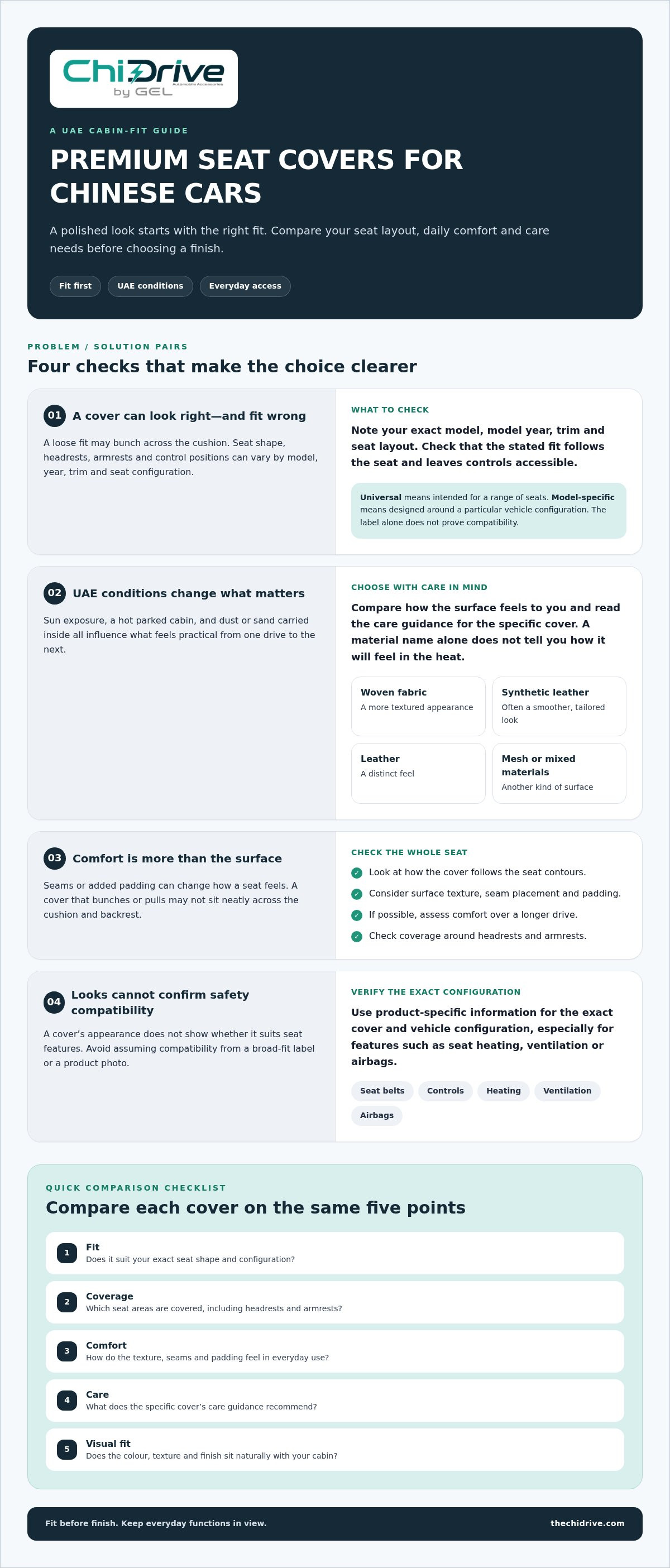
Practical Checklist for Choosing UAE Car Seat Covers
A few notes before you browse can make it easier to compare covers without getting distracted by finish alone. Work through these checks in order, from identifying the cabin to thinking about how you use it during a typical UAE week.
- Identify the vehicle. Record the brand, exact model, model year and trim where known. Don’t substitute a similar model or a different year for the vehicle you own.
- Describe the seats. Note the layout and visible features, such as separate or integrated headrests, armrests, seat belts and controls. Include any seat features a cover could affect, and use product-specific fit information rather than guessing.
- Compare the stated fit. Match the cover’s listed vehicle and seat configuration against your notes. If left-hand-drive or right-hand-drive fitment is relevant, use the details for that particular option rather than assuming.
- Rank your daily priorities. Decide whether coverage, comfort, a coordinated appearance or straightforward care matters most. A family car with frequent entry and exit may call for different priorities than a car used mainly for occasional trips.
- Factor in UAE routines. Think about how often the car sits in direct sun, including in open parking, and how much sand or dust comes into the cabin. These conditions can guide your priorities, but they don’t guarantee how a specific material will perform.
- Review care and fitting guidance. Read the instructions supplied with the specific cover before buying. Check what they say about installation, adjustment and cleaning. Don’t apply care methods or fitting steps from another product.
- Read the return terms. Review the applicable terms before ordering so you understand the stated return window and conditions. ChiDrive’s 7-day return policy is a useful detail to factor into your purchase decision.
Start with the exact vehicle and seating layout
Keep your vehicle details beside you throughout the comparison. Seat shape, headrest arrangement and control position can all affect how a cover fits and functions. If a listing describes a different trim or model year, don’t assume it matches yours. Compare the written fitment details with your car.
Match practical priorities to daily driving
Give each priority a clear place: protection from routine use, comfort during your usual drives, a finish that suits the cabin and care you can manage. For premium car seat covers for Chinese cars, this sequence keeps the choice grounded in your vehicle and routine rather than appearance alone. ChiDrive’s Chinese-car accessories collection lets you browse accessories by brand as you consider a cabin upgrade.
Explore Chinese-car accessories with ChiDrive
Choosing premium car seat covers for Chinese cars is about matching a cover to your vehicle, not simply finding a finish you like. ChiDrive is a UAE online retailer focused on accessories for Chinese automotive brands. Its brand collections give owners a clear place to browse, while the vehicle’s exact model and seat details remain central to any fit decision.
Use brand collections to find accessories for your car, then compare product details with your vehicle before deciding on fit. If you drive a BYD, start with the BYD accessories collection.
Browse accessories by Chinese-car brand
Starting with your brand can make browsing more focused, especially if you’re also considering other cabin accessories. Keep fitment details in view as you compare options: model year, trim and seat layout all matter when choosing a seat cover. A brand match alone is not enough to establish that a cover suits your seats.
Make the final buying decision with confidence
Keep your decision order simple: vehicle fit first, then seat features, daily comfort, care and finally style. This helps you judge a finish in context without letting appearance distract from fit or everyday use. ChiDrive offers free UAE delivery on orders over AED 150, cash on delivery and a high-quality guarantee.
Browse ChiDrive’s Chinese-car accessories by brand, and base your seat-cover decision on the details of your cabin. A considered combination starts with fit, realistic care expectations and a finish you enjoy.
Explore ChiDrive’s Chinese-car accessories
Make your next cabin upgrade a considered one
Your interior is part of every journey, from a quick errand to a longer drive across the UAE. A considered choice should suit the car and the way you use it, not simply follow a passing style trend. Keep your vehicle details close as you browse, and let them guide your decision about premium car seat covers for Chinese cars.
ChiDrive brings Chinese-car accessories together in one UAE-focused place to browse by brand. Explore with a clear idea of the cabin you want, and use product information to guide any fitment decision. A thoughtful upgrade starts with your car, then makes room for your personal style.
Choose with care, and make your cabin feel more like yours.
Frequently Asked Questions
Are premium car seat covers suitable for every Chinese car model?
No. A cover suits a vehicle only when its stated fit matches the particular model and seat configuration. Chinese-car brands don’t share one common cabin layout, and vehicles from the same brand can have different seat shapes or features. Treat “universal” as a broad fit description, not confirmation for every model. A cover intended for another car may sit poorly or leave parts of the seat exposed.
Can seat covers affect side airbags or other seat safety features?
Yes. An unsuitable cover or installation could interfere with features built into a seat, including a side airbag. Choose a cover whose product information specifically addresses compatibility with the relevant safety feature and your vehicle. Don’t cut, alter or reposition a cover to make it fit. If the fit or installation guidance doesn’t clearly address a safety feature, don’t assume the cover is suitable for that seat.
How can I check whether a seat cover fits my car’s model year and trim?
Use your vehicle documents or owner information to identify the precise model year and trim, then compare those details with the cover’s stated fitment. A clear photo of the front and rear seats can help you spot differences in headrests, armrests and seat controls while reviewing product details. Don’t rely on a matching brand name or a similar-looking model; neither establishes fit.
What seat-cover material should I consider for UAE heat and sun exposure?
There isn’t one material that’s automatically best for UAE conditions. Compare the specific cover’s surface feel, texture and care guidance, and consider how you use the cabin, including time parked in direct sun. A smooth synthetic surface, woven fabric or leather may each feel and look different, but the label alone doesn’t tell you how comfortable it will be in a hot cabin. Review the product details before deciding.
Can seat covers be used with heated or ventilated car seats?
Rely on compatibility only when the cover’s product information explicitly supports use with your exact seat feature and vehicle configuration. An added layer may affect how heat or airflow reaches the occupant, so don’t assume a cover will work as intended simply because it fits over the seat. If those functions matter to your daily drive, prioritize clear, product-specific guidance and don’t modify the cover to expose vents or controls.
How should I clean a seat cover without damaging its material?
Follow the care instructions supplied for that particular cover. Materials and finishes can require different methods, so don’t assume a cleaner suitable for one cover is appropriate for another. Before treating a spill, check whether the guidance permits spot cleaning, washing or removal. Avoid harsh chemicals, steam or machine washing unless the product instructions allow them. Regularly removing loose dust with an approved method can also help keep the cabin tidy.
Do seat covers protect car seats from sand, dust, and everyday marks?
A cover can add a surface between the original upholstery and some routine contact, dust or marks, but the level of coverage depends on its design and fit. Don’t treat it as a sealed barrier or a promise that the seat will remain untouched. In a UAE cabin, remove loose sand carefully and clean the cover according to its care instructions rather than letting grit build up.


